Sunday, October 24, 2010
My ebooks now self 'published' on Scribd
The following two ebooks i wrote while working at Dow Jones (where i am still currently). One is about Hybrid Approaches to taxonomies and folksonomies in the enterprise that came out in 2008 and the other one is about how social media is changing the enterprise which i co-wrote with Robert Scoble, Shel Israel and Greg Merkle in 2009.
~enjoy!
The Taxonomy Folksonomy Cookbook: Finding the Right Recipe for Organizing Metadata
You can also view the French Version of the Taxonomy Folksonomy ebook.
Conversational Corporation: How Social Media is Changing the Enterprise
You can also view the French version of the Conversational Corporation ebook.
Thursday, November 05, 2009
November Equals Pumpkin, Taxonomy Bootcamp and Enterprise Search Summit
 I looked at the calendar yesterday and the realization that November is upon us hit me pretty hard. With November comes a lot of pumpkin (here is my new pumpkin addiction recipe for this year) and a few speaking spots before i go out on maternity leave (yeah yeah i can't believe it's already time either!).
Just like last year and the year before i will be attending and presenting at Enterprise Search Summit and Taxonomy Bootcamp which i am really looking forward to.
At Enterprise Search Summit West i have been asked to participate on a panel titled "Is Semantic Technology Real?" moderated by Rob Gonzalez from Endeca.
| Is Semantic Technology Real? | ||
Michael J. Cataldo, CEO, Cambridge Semantics Daniela Barbosa, Business Development Manager, Dow Jones Client Solutions, Dow Jones & Company Lorenzo Thione, Founder / Principal Program Manager, Powerset / Bing Microsoft, Inc. Semantic technology is all the rage, sometimes even dubbed “Web 3.0.” However, many people—especially those making technology decisions for enterprises—wonder whether semantic technology has meaningful applications in the enterprise. Based on hands-on experience working with semantic tools, this panel of experts will establish the boundaries between reality and hype and help you understand what enterprises can gain from semantic technology in the here and now. |
At Taxonomy Bootcamp, i have been asked to be part of a panel that Wendi Pohs is running titled "From the Lighthouse: Visioneering Taxonomies’ Future which promises to be an engaging panel on the future of taxonomies. I have been in forward looking mode for the last few months so i have been thinking about this subject quite a bit.
| From the Lighthouse: Visioneering Taxonomies’ Future |
| 4:00 pm – 5:00 pm Moderator: Wendi Pohs, Chief Technology Officer, InfoClear Consulting Daniela Barbosa, Business Development Manager, Dow Jones Client Solutions, Dow Jones & Company Jenny Benevento, Information Architect/Taxonomist, Sears Holding Company Gia Lyons, Social Business Software Consultant, Strategic Consulting, Jive Software Steve Ardire, VP Strategy & Business Development, Early Stage Semantic Technology Startups Join Wendi Pohs and this panel of experts as they peer into the future of taxonomies. Each panelist concentrates on a specific area, including semantic management tools, consumer-driven taxonomies, social networking software, and emerging semantic technologies. We’ve asked these speakers to both enlighten and challenge you, so bring your thinking caps and questions. |
It is not too late to register and you can use these codes for some discounts- Enterprise Search Registration with SPK5 code and Taxonomy Bootcamp registration with SPK5 code.
My sessions last year featured a Synaptica Case Study at Taxonomy Bootcamp titled "Proquest: Finding a Common Language: Bringing Complex and Disparate Vocabularies" (video available here) and at Enterprise Search Summit a presentation on Centralized Taxonomy Management for Enterprise Information Systems (video available here)
Looking forward to seeing everyone there including the Dow Jones Taxonomy Team (Dow Jones is a KMWorld sponsor- note: my speaking spots are not sponsored spots but by invitation of the moderators) and the Synaptica team who are exhibiting and sponsoring Taxonomy Bootcamp!
Image|Flickr| minipixel
Note this post is cross-posted on the SynapticaCentral Blog.
Friday, September 11, 2009
Patrick Lambe's Survey on the Future of Taxonomy Work
 This post was originally posted on the SynapticaCentral Blog.
Patrick Lambe has been analyzing the knowledge, skills and experience needs of the taxonomy profession for a while and as part of this his work he is conducting a survey on the present and future of taxonomy work and the needs of taxonomy professionals. Patrick is the author of a great taxonomy development book titled "Organising Knowledge: Taxonomies, Knowledge and Organizational Effectiveness" and an active writer on the topic of taxonomists and taxonomy development on his Green Chameleon blog.
Patrick, like some members of our own Dow Jones taxonomy team will also be Taxonomy Bootcamp in San Jose this November. Acording to his orginal request for survey responses, participants in the survey will also get a report of the results (which will include additional research beyond the survey). Patrick writes: "For those of you who believe that taxonomies still have a future, this might make interesting reading, and for those of you who believe a la Theresa Regli that “taxonomies are dead”, we’d like to hear from you on why!"
You can take the survey at http://tinyurl.com/taxonomywork
Image|Flickr|Jima
Thursday, August 21, 2008
Why my dog is like a search engine without a taxonomy
So i told him he was like a search engine without a taxonomy and then he looked even more confused. Then we made this video. he is a bit bored because it is the second take so the intial reaction is not 100% but hopefully you get the idea!
As humans we easily make associations between words- machine and dogs can't unless they are "trained".
He is a 4 year old Great Dane in case you are wondering
Tuesday, June 17, 2008
Folksonomies and Taxonomies in the Enterprise- My eBook Advocating a Hybrid Approach
 So to date- my favorite feedback on my ebook on Folksonomies and Taxonomies in the Enterprise that was launched on Sunday for the start of the Special Library Association (SLA) conference in Seattle was from a fellow co-worker. In her email she congratulated me on a job well done, that the ebook looked great and that "Maybe you can get someone to animate your character and you can get her to do some of your work for you?" Oh boy...only if i could!
I have been on the road for what seems like ages- conference season is at hand, Semantic Technologies conference, Internet Retailer and now Special Library Association- awesome stuff but boy am i behind- if only i could get my ebook avatar to indeed give me a hand.
This ebook is nothing like i have seen been produced by Factiva/Dow Jones in the 8+ years i have been here. My marketing project manager for this ebook, Kelly Minervini did a spectacular job with putting it together and i am extremely grateful to her as well as the rest of the folks that worked on the team to get this out- it is beautifully designed and laid out, fun to read and provides a great description of my thoughts around the hybrid options around Enterprises leveraging hybrid approaches to Folksonomies and Taxonomies as part of their information strategy.
This ebook is laid out as a “Cookbook” in an effort to help readers find the best “recipe” for their enterprise metadata needs. It is divided into chapters and subheads, each titled with a play on words about the art of cooking. We wanted to make it a fun piece for the audience to read, so it contains cooking/food illustrations as they relate to the taxonomy/folksonomy theory described.
If you have been reading my blog for a while, you know that social tagging is a topic i am very interested in as it relates to information delivery and organization.
The ebook discusses:
- The business value of a taxonomy/folksonomy and how you can deploy a solution that will grow with an organization
- The impact of social networking tools on the enterprise
- The governance tools that can be or should be applied
- How to (and if you really should) merge folksonomies with existing taxonomies
- Best practices
- Common challenges and obstacles
Some of the key messages and take-aways i was trying to illustrate:
- The taxonomy versus folksonomy issue is not an “either/or” debate, but an opportunity for mutual progress. By combining the virtues of each approach into a working hybrid model, the enterprise can achieve its goal: a user-friendly system that encourages collaboration and makes information easier to find.
- Good content management tools are not necessarily those with the most features or the greatest power, but those that encourage participation by being easy to use.
- There is no one right way to incorporate a folksonomy into an enterprise. Instead, there are levels of engagement ranging from free and loose social tagging with little supervision to closely monitored tagging built around a tightly controlled core taxonomy. By precisely identifying your goals, you can more effectively determine the balance between community freedom and centralized control that is right for your enterprise.
- Today, the state of enterprise folksonomies is comparable to the state of corporate intranets and portals a decade ago – a learn-as-you-go period of trial-and-error experimentation.
- There is no end to the possibilities of a hybrid approach to enterprise taxonomies and folksonomies. In fact, the important conclusions are not the ones the ebook draw, but the ones that the reader reaches after careful consideration of their enterprise needs and ambitions.
Thanks again to all the great folks that helped me in finalizing this ebook and for Dow Jones for the opportunity to publish this it!
Wednesday, April 30, 2008
Photo Categorization Different Needs for Different Users
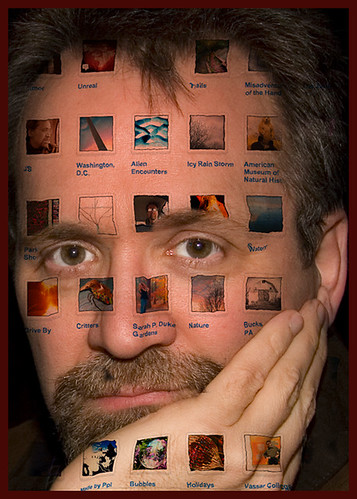
John Suler has an interesting project going on using Flickr about The CyberPsychology of Flickr and his recent addition was about Categorizing Images which came with the photo i include in this post. The project is to encourage discussion on how "people in flickr use photographs and images to express themselves, converse with each other, and form relationships as well as groups" and this addition was focused on how flickr users categorize their pictures.
In talking about personal 'taxonomies' he writes: "The categories you start off with may not work well later on. And the way you organize images for your own personal archive may be different than the collections you create for showing your images to others, as in flickr." In my world of taxonomies, we call this audience centric views- different audiences either by user type, location (e.g. US/UK), or usage purpose, etc.. Well built taxonomies allow this and robust taxonomy management tools enable this. Here is a paper on how the National Library Board of Singapore uses Audience-Centric Taxonomy: Using Taxonomies to Support Heterogeneous User Communities'
The other topic was Keywording for biology/taxonomy/nature photographers using Aperture which i have not used but seems to have a more robust keyword management tool allowing a hierarchy to be built. In the thread Stewart Macdonald highlights one of the things that for example content editors benefit from when a hierarchal taxonomy is presented that allows selection when tagging and that can also automatically expand the user-selected terms using related terms from their taxonomy system (and it does not have to exclusive of free text tags either!).
Stewart writes in response to someone who suggests that he just add keywords and then use search to find photos: "The hierarchy is important to me. If I didn't have nested keywords, I'd have to assign the following keywords individually to any pics of crocodiles:
animal
vertebrate
reptile
crocodile
Crocodylus
Crocodylus porosus
Being able to just assign 'Crocodylus porosus' and have all the 'upstream' keywords included too is a bit quicker.
I am always trying to find 'consumer' examples to illustrate concepts- that although might be different in a corporate environment still help the user understand some of the benefits- so these things and flickr- delight me.
Photo credit : jsuler
Thursday, March 13, 2008
Staged Debates on Taxonomies
This evening i found these videos from the 2005 Content Management Pros Summit where Theresa Regli and Seth Earley debate the pros and cons of various taxonomy issues by flipping a coin to see which side they will take debating each issue. Both of them can obviously argue both sides of the coin because they have heard it all from their customers and i think the format works well and is instructive on the topic:
- Introduction
- Do taxonomies make managing content easier?
- Do content management systems need a taxonomy to function?
- Is there such thing as a galactic taxonomy/uber taxonomy?
- Does a taxonomy have to have at least three levels?
- Isn’t taxonomy the same as navigation?
- Are subject matter experts necessary to create a taxonomy?
- Can taxonomy development be managed as a project?
- Taxonomy Automation
- Automatic Classification
- What's an Ontology?
- Credits
Sunday, February 03, 2008
Video Library: Dave Clarke on Taxonomy Management Tools
The best part is that i have seen Dave give this talk multiple times, but never managed myself to get it on video so I am glad these are out there because now i can always reference them. Thanks!
Patrick Lambe who posted these also just published a book on taxonomy development titled: Organising Knowledge: Taxonomies, Knowledge and Organisation Effectiveness that has been receiving positive reviews in the community.
To watch, i threw this up on my big monitor and watched the video while following the slide deck which was a good way to see all the slides.
Part One: Dave introduces Synaptica from Dow Jones and other Taxonomy management tools and how to use these tools to collaborate around taxonomies
Part Two: Dave take the audience through using Synaptica to create taxonomies
Part Three: Dave discusses integrating taxonomies into a business infrastructure, talks about the different systems that are typically integrated with a taxonomy management tool and the importance of using open standards (RDF, SKOS, OWL)
If you find these video's interested Patrick Lambe has other videos on his Blip.tv channel that might interest you.
Wednesday, January 30, 2008
So I Get to Be a Potty Mouth at Work
 i got to be a potty mouth at work again this week, well at least i got to read and speak a lot of 'bad' words because i have been having various conversations with prospects and one with a partner about 'Inappropriate Language' taxonomies (uh but lot's of words are in my own daily vocabulary so does that make me inappropriate?- WT#@!?;-) .
So as you can imagine i am already loving my new focus as Business Development Manager for Synaptica which includes among other things the Taxonomy Warehouse site (yes site needs some work) that has such fascinating topics as 700,000 Acronyms, Initialisms and Abbreviations, Fashion and Apparel and of course my personal favorite Inappropriate Language that are partners provide.
So over the last few years custom taxonomies and pre-built taxonomies have been a major part of the work that my teams have delivered to customers. With my background in information science and years of experience in observing our taxonomy experts custom build taxonomies i know the hundreds of 'people hours' that it takes to build a solid taxonomy/thesaurus. However, it is a hard conversation to have with a lot of customers when license costs are discussed- because if you haven't built one you simply can't imagine the effort in not only building but implementing and governing to ensure that it remains fresh.
So, i have been stressing out a bit because of a meeting a signed myself up for and i don't think it was for a valid reason at all-just because i license taxonomies and thesauri for a fee it doesn't mean i don't support open standards like those that are supported by the DataPortability group - the DP group is not about 'free' it is about open standards that allow portability of data regardless if it is 'paid' for or not. So for example, many of our available taxonomies are delivered to customers via RDF format one of the DP supported formats.
So i was stressing specifically because I signed up for the Freebase meetup next week ( Freebase is a collaboratively-edited database of cross-linked data) and had to answer the following question as part of a survey:
Do you fit into any of these groups?
- I'm an open data person. Information wants to be free!
- >>So i am an open data person- but i don't think that all information wants or can afford to be free.
- I have this specific topic I'm really into, and want Freebase to hold the data about it.
- >>>ok sure i can come up with something and when i submitted the survey i had no use that i could devote time to but now I thinking of potentially looking at freebase to manage the DP Definitions.
- I develop apps or mashups, and want to use Freebase data
- >>>my dream, to have time and real skills to do this well
- I refuse to be labeled, but will describe myself here:
Anyway....if you are interested in licensing an inappropriate language taxonomy please contact me so i can continue to be a potty mouth and if you are lucky enough (i promise i won't charge you any more ;-) you can hear me articulate some of the terms that essentially are inappropriate for corporate communications- just because we can.
Image attributed to
Sunday, January 13, 2008
Resources from recent Webcast: Folksonomies and Taxonomies in the Enterprise
As part of the follow up i have created a Wiki for the community to participate and share with each other on the rather new topic of using both Folksonomies and Taxonomies in the Enterprise. From the Wiki you can also link to the recorded Webcast or the Slide deck that i have posted on Slideshare. I still have a lot to do on the Wiki (e.g. finishing the Q&A from the session)- but i hope that others will also assist in making the Wiki a useful place for those who are interested in the topic. If you know someone in the Enterprise that is looking into Folksonomies please send them a link to the Wiki (thanks!).
If this is a subject of interest, please be sure to check out the wiki and share additional resources or thoughts on the issue.
Many thanks to Lorraine Bell for all her assistance in coordinating this WebCast!
Friday, December 21, 2007
Webinar: Folksonomies & Taxonomies in the Enterprise
 In January i will be leading a Webinar organized by the Dow Jones InfoPro Alliance about Folksonomies & Taxonomies in the Enterprise.
From the e-mail invite:
Enterprises today face a critical challenge: How to manage an abundance of increasingly complex and disparate information assets in an environment of constant change and technological complexity. How do you provide tools that your users are used to using in the commercial world in order for them to stay competitive and enable collaboration?
Results from a recent round table event on Folksonomies & Taxonomies that discussed these challenges will be shared as well other research work that has been focused on the topic.
Other topics to be discussed include:
* What is the business value of a taxonomy/folksonomy and how can you deploy a solution that will grow with the organization?
* What’s the impact of social networking tools on the enterprise?
* Which governance tools can or should be applied?
* How do you merge folksonomies and existing taxonomies – or should you?
* Some best practices and common obstacles
Date: Thursday, 10 January
Time: 11:00 a.m. US Eastern Time/8amPST
to register please follow this link.
If you have items that you would like for me to address or you that would like to share with the audience about your experiences with Folksonomies in the Enterprise space, please drop me a line at daniela{dot}barbosa{@}dowjones.com - thank you in advance!
Monday, November 19, 2007
Users Generate but eventually someone will have to play Editor
From Jarvis's post the position calls for:
Guardian Unlimited requires a keyword manager to look after the labelling of our content online to ensure that it is consistent with the needs of the reader and the editorial values of the Guardian and Observer. The role requires attention to the demands both of a considerable content archive and of a fast-moving news operation, and involves work across media; from text to cartoons, video to podcasts. It would suit either a journalist with a particular interest in archiving, or someone with a background in information science who possesses a keen editorial sense.
Media room Editors that are responsible for adding metadata to articles are nothing new-like the ones at The New York Times. As media sites begin allowing user generated tags it will certainly add immense value for their readers as well as for their own editorial staff since they can learn new terminology that their readers are using much quicker then the traditional methods. Media sites whose core business is to deliver news content however need a robust yet flexible standard taxonomy that drives the type of news that is being published. A combination of both types with 'Editor 2.0' editorial purview will allow a rich display of aboutness of the news content outside of the standard tags clouds and lists we are used to seeing when sites open up tagging to users and i am looking forward to seeing some of these implementations.
Interested in discussing a similar topic of Folksonomies and Taxonomies but focusing in the Enterprise space? Perhaps you can join us for an upcoming round table event.
Thursday, October 25, 2007
Tagging and Folksonomy reading from ASIST
Introduction: Folksonomies and Image Tagging: Seeing the Future?
by Diane Neal, Guest Editor
Full Text: HTML | PDF (Size: 502k)Why Are They Tagging, and Why Do We Want Them To?
by P. Jason Morrison
Full Text: HTML | PDF (Size: 96k)Trouble in Paradise: Conflict Management and Resolution in Social Classification Environments
by Chris Landbeck
Full Text: HTML | PDF (Size: 95k)Image Indexing: How Can I Find a Nice Pair of Italian Shoes?
by Elaine Ménard
Full Text: HTML | PDF (Size: 109k)Flickr Image Tagging: Patterns Made Visible
by Joan Beaudoin
Full Text: HTML | PDF (Size: 82k)
As i recently blogged this December i will be hosting a round table event to discuss Folksonomies and Taxonomies in the Enterprise - which will also include a tour of our printing plant in Palo Alto. If you are interested or know someone who is working in this space and would like attend, please drop me a line we still have a couple open seats. daniela{dot}barbosa @dowjones.com
Monday, April 09, 2007
We love Netflix and want to make it better

In this session, I interview Keith Deweese an avid Netflix fan (tune in to hear about his favorite movie~ hey i was surprised!).
Keith however is a taxonomist and a very good one to boot and he feels that Netflix could drastically improve its service by improving core website features like browsing, navigation and search for end users.
During the interview, we discuss how we think that the Netflix recommendation engine contest is great but feel that Netflix needs to first make some improvements to allow users to find what they are looking for- by following some standard information categorization practices and improve their service overall.
Keith is based in Chicago and i filmed this session in San Francisco using a Web Conferencing Tool, a conference phone and a wall projector (i couldn't get the video conference working but the first clip in which we do introductions has a great picture of Keith).
His blog post on subject can be found over on his Blogex Deweese blog. Thanks-Keith!
If you have specific experiences with Netflix that you would like to share on this topic feel free to leave a comment or a link to your response.
Sunday, January 01, 2006
Things i will as see across various solutions
- RSS>>
>>> RSS as a delivery mechanism across applications that we deliver. Our destination products are already RSS enabled for personal clipping and more and more companies are asking us to feed our authoritative sources into their RSS delivery mechanisms. Blog content and RSS media outlets provide additional value add to news that is being pushed out to the enterprise and we continue to incorporate it into our solutions
- Service Orientation (SO)
>>> Service Orientation is not simply about IT, although the SOA buzz clearly looks like it, but i see it more about the enterprise as a whole from business owners to end-users. Encompassing people, processes and technology, Service Orientation is an approach to managing all of the resources available by representing functionality as services that business users can use within their existing applications and providing rich, dynamic interoperability regardless of platform or programming language. When looking at Enterprise content (both internal and external), the folks that manage that content (or at least the access to the content) are looking at our expertise to help them. Our experience from having a business based on aggregation and relevant delivery of content (over 9000 source, in 22 languages and delivered to us in over 700 formats) to over 1.5 million subscribers has provided our consulting group with over 15 years of experience in advising our clients based on best practices and implementations of information strategies within many of our Fortune 500 global customers. I personally think that the most valuable service our consulting group can offer is our expertise. See my post on Enterprise Content Frameworks
- Search vs. Discovery>>>
>>> Oh yeah one of my favorites. Remember i am a librarian, spending three years learning about searching, Dewey Decimal, cataloging, taxonomies, information architecture and yeah that one course i had that focused on user interface design that thanks to the professor turned into more on data visualization and clustering.
So 'Search' is the act of looking -- before something is found. 'Discovery' is the finding and comes after the search. What if we could use technology to help searchers discover things by presenting results visually and taking advantage of clustering technologies, etc. You will see more of this from Factiva in 2006 and i promise you and that you and i will be talking about it!! Just remember 'Search 2.0'---
- Wireless Access>>
>> About three years ago i had a managing director at a global investment firm tell me that the 'desktop is dead' while fiddling with his blackberry. Wasn't surprising to me then as i was already addicted to my crackberry and certainly isn't to any of you today. Over the last two years our consulting group has delivered various custom applications with wireless delivery. Our destination products including our new SalesWorks product is wireless enabled and we are seeing more and more companies enable their internal systems like sales portals and CRMs. We have also been consulting with clients to devise wireless delivery information strategies that focus on relevant delivery models, user interface design and access points.
- Taxonomy>>>
>>>Certainly not new on my list or even yours but still as important and will continue to be so in our information intensive world. Our consulting group has over the years assisted clients in developing custom taxonomies (for both external and internal applications), instituting maintenance and governance models and implemented our own taxonomy into various enterprise applications. Hey it is what we do for a living so why not leverage that expertise with our customers? In 2005 Factiva launched Factiva’s new Synaptica Knowledge Management System (KMS) for building and maintaining taxonomies and thesauri in enterprise applications.
Going back to my thoughts on Web 2.0 applications, Folksonomies are also of interest as we build applications that leverage the authoritative systems of a formal taxonomy, yet provide flexibility to encourage participation by users.
- Media - video/podcasts>>>
>>> No doubt that integrating video and audio content like podcasts into a user’s workflow is going to happen more and more. For example we have some customers that handed out iPods to their workers in order to push self-learning tools and even executive messaging from HR, how hard would it be to have for example a salesforce subscribe to weekly industry highlights from top global sources or a internal corporate communication podcast of the company news? We also already have clients that include media file links within their daily news summaries and post video files daily on their portals. I think the trickiest part is going to be figuring out the copyright issues.
- APIs >>>
>>>Everyone has them hitting different parts of their services : Google, Microsoft, Amazon, Ebay and on and on and on. Opening the API store for business is what it seems like. Mostly in Beta but there are hundreds of very interesting applications that people have built already. How can enterprise applications that deal with distributing information to end-users leverage some of these APIs in combination with the Factiva APIs? I intend on learning more and already have some thoughts on how to leverage some of these search APIs for users such as corporate research groups that use a variety of tools to compile research reports for clients.
- Collaboration applications>>>
>>> Ok i am not that old but see it already; our new workforces are going to insist that our enterprise applications have similar functionality as their personal gadgets. Hiring top notch twenty somethings now a days is going to take more then a good starting salary and promises of advancement. Some companies are struggling with the hiring process and are using their innovated internal applications like collaboration portals (e.g. SharePoint) as a way to show how the company embraces technology and values individual participation for the good of the group. Most new young employees will already have RSS aggregated sites that incorporate all their personal and business views of the world. Enterprises need to deliver something that is either better or provides more value that they can not get from the 'outside'.
- Integration into desktop workflow applications like e-mail, calendaring Word, PPT.>>>
>>> Yes. Yes. Yes. What do we have already? Outlook calendaring- make an appointment with a client- allow smart tags to figure out who the company is and have a automatic email with the top news stories on that company sent to you one hour before the meeting. Very useful, especially for sales and executives.
What else? In the Sales, Strategic Account Plans (SAPs) tend to be a very time consuming task that involves manual copy and pasting from various websites and subscription services like Factiva etc. Well using our APIs (which by the way our Factiva Web Services are MSFT Information Bridge-compliant Web Services) we have a way to automatically update certain fields within a SAP (in Word, Excel or PPT) allowing sales people to spend time working on strategy, focusing on what the information means that they have in their SAPs and focusing on relationship building rather then on manually inputting data.
See my post "Company, Executive and Industry content integration- into more then Portals and CRMs?-- Email and calendaring applications, SAPs, etc."
There are a lot more things i have brewing in my head, many even a bit more abstract then any of the above that are based on 'reality'.....i am certainly looking forward to being in the middle of this.

